
On paper, ¼″ of riser difference doesn’t look like much. But for a building inspector — and for anyone walking the stairs — it’s a real safety and code issue. Uneven risers are one of the most common reasons stairs fail inspection, and the cause is often completely preventable.
What the Code Says About Riser Variation
Most US residential stair rules are based on the International Residential Code (IRC) or similar local codes. The exact wording varies, but the principle is the same:
- All risers in a flight must be uniform in height
- The difference between the tallest and shortest riser is limited (often ⅜″ max variation)
Example:
- Smallest riser: 7 ⅛″
- Largest riser: must typically be ≤ 7 ½″
If one riser ends up ¼″ higher or lower than the rest — especially at the first or last step — it can be enough to fail inspection.
Common Causes of Riser Variation
Most riser problems come from coordination and sequencing, not from bad intentions.
1. Flooring Added After Stairs Are Framed
- Stairs are framed to the subfloor height
- Later, someone adds tile, hardwood, or thicker flooring at the top or bottom
- Result: first or last riser is suddenly higher or lower than the others
This is probably the #1 reason inspectors flag uneven risers.
2. On-Site Stringer Cuts
If stringers are cut manually on site:
- Slight errors in marking or saw angle
- “Close enough” thinking under time pressure
Can create a cumulative difference across a flight. Each step might be off by just a hair, but the shortest vs tallest riser can easily end up more than ¼″ apart.
3. Changing Tread Thickness
- Original layout assumes standard tread thickness
- On site, thicker treads or mixed materials are used
- One or two steps end up a bit higher or lower
If this happens mid-flight or at a landing, the “odd” step is very noticeable.
How Inspectors Check It
Inspectors typically:
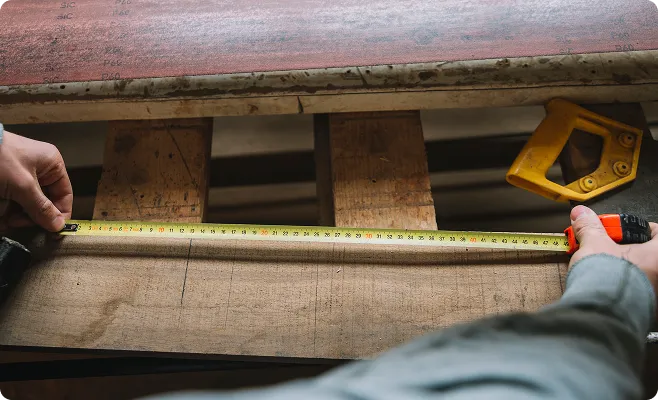
- Measure each riser (finished tread to finished tread)
- Identify the shortest and tallest riser
- Compare the difference to the allowed variation (e.g., ⅜″)
They pay special attention to:
- The first step (floor to first tread)
- The top step (last tread to upper floor)
If the difference exceeds code — even by a fraction — the stairs can fail inspection, and correction often means messy, expensive rework.
The Real Cost of “Just ¼″
Failing inspection over riser variation can lead to:
- Rebuilding or modifying parts of the stair
- Cutting or replacing treads
- Adjusting landings or flooring
- Re-booking inspections and delaying handover
A small miscalculation early in the project can become a high-cost problem at the very end.
How to Prevent ¼″ Riser Problems
The good news: with a bit of discipline, riser variation issues are almost always preventable.
1. Design From Finished Floor to Finished Floor
Before framing or fabrication, lock in:
- Subfloor + underlayment
- Finished flooring type and thickness
- Any transitions at the top/bottom of the stairs
Then calculate:
- Total height (finished-to-finished) ÷ number of risers
- Make sure the resulting riser height is within code and consistent.
2. Coordinate Tread Thickness
If you change:
- Tread thickness
- Material (e.g., metal structure + wood caps)
Re-check the finished riser heights and adjust layout before anything is installed permanently.
3. Double-Check First and Last Riser On Site
Before calling for inspection:
- Measure each riser, including the first and last
- Confirm the smallest and largest riser are within the allowed tolerance
- Fix small issues now, not after the inspector flags them
When to Bring in a Specialist
If a project includes:
- Complex geometry
- Multiple materials
- Tight code constraints
- Previous failed inspections
It may be worth working with a stair & railing specialist who can:
- Design directly from CAD and field conditions
- Plan riser heights around flooring and landings
- Deliver code-compliant stairs from the start.
Conclusion
A ¼″ riser variation may seem insignificant, but for building safety and code compliance, it’s a big deal. Uneven risers:
- Break the walking rhythm
- Increase the risk of trips and falls
- Are a common reason for failed inspections
By planning from finished floor to finished floor, coordinating materials, and checking risers carefully before inspection, you can avoid costly rework — and keep every step feeling exactly the way it should.